

Bare-nosed Wombat
SPECIES VOMBATUS URSINUS

DISTRIBUTION

WEIGHT
20-45kg

LENGTH
700-1100mm

TOP SPEED
Up to 40km/h over short distances

COLLECTIVE NOUN
Wisdom
The bare-nosed wombat, also known as the common wombat, is a stocky, powerfully built marsupial found across southeastern Australia, including Tasmania and parts of southern Queensland. With its bear-like face, small, rounded ears and large naked nose, it's among the world's largest burrowing animals, and the only living member of the genus Vombatus.
Bare-nosed wombats are part of a small group of Australian marsupials adapted for life underground. Using their powerful limbs, flattened claws and broad, short feet, they dig extensive burrows, sometimes up to 30 metres long and several metres deep, usually situated on slopes above creeks and gullies.
These herbivores graze mainly on native grasses, tussocks and sedges, occasionally eating bark, herbs and moss depending on what's available. They're the only marsupial with continuously growing teeth, an adaptation that lets them cope with the constant wear of a tough, fibrous, grass-heavy diet.
Wombats are mostly nocturnal, though in cooler weather they may be seen out during the day, either grazing or basking in the sun. They are largely solitary animals, and mark out their feeding territory using scent trails and scats left on prominent rocks and logs.
Like other marsupials, female wombats carry and raise their young, called joeys, in a pouch. Unusually, a wombat's pouch opens toward the rear, which prevents dirt from getting in while the mother is digging. After a short gestation, the joey continues developing in the pouch for several months before gradually becoming independent.
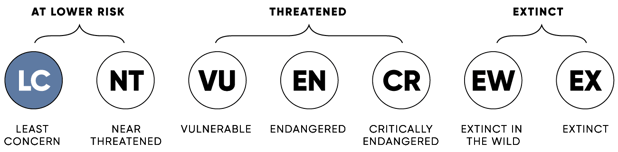
Although still classified as Least Concern, bare-nosed wombat populations face ongoing pressure from habitat loss through land clearing, predation by feral dogs, vehicle collisions, and sarcoptic mange, a disease that occurs throughout their range and poses the greatest threat to the species. Conservation efforts continue to focus on protecting habitat and managing disease to support this uniquely Australian animal.
Conservation Status
Did You Know?
They also mark their territories with scents and odd shaped scats. Their poo is rectangular in shape which makes it less likely to roll away, even when it rains, thus making it an excellent boundary fence to ensure other wombats know who has taken ownership of that particular home range.